
Dr. Jessica Dimmick, Au.D
March 27, 2026

If you've been putting off a hearing test because you're not sure what it involves, you're not alone. Most people delay simply because the unknown feels intimidating. Here's the reality: it's completely painless, takes about an hour, and gives you real answers about your hearing health.
Hearing loss is the third most common health condition in the United States, and it tends to develop so gradually that most people don't notice until the changes are significant. A baseline hearing test creates a record of where your hearing stands right now — so if things shift down the road, you and your audiologist can catch it early.
Even if your hearing feels fine, a baseline is worth having on file. For most adults, we recommend re-testing every one to three years. After age 60, annual testing makes sense.
There's nothing complicated here. Just come ready to share a little background: your health history, any medications you take, and any specific concerns — like struggling to follow conversations in noisy restaurants, or a persistent ringing in your ears.
If you already wear hearing aids, bring them. If you have previous hearing test results from another provider, those are helpful too, though not required.
A comprehensive evaluation at Hearing Doctors of the Heartland includes four components, each serving a specific purpose.
A visual check of your ear canal. Your audiologist starts by looking inside your ears with a small handheld instrument. This quick check confirms there's no earwax buildup or other physical blockage that could affect your test results.
Middle ear function testing. A small probe is gently placed in the ear canal, creating a brief pressure change. You don't have to do anything — the equipment handles it. This reveals whether your eardrum and the small bones behind it are working properly, and can detect things like fluid behind the eardrum.
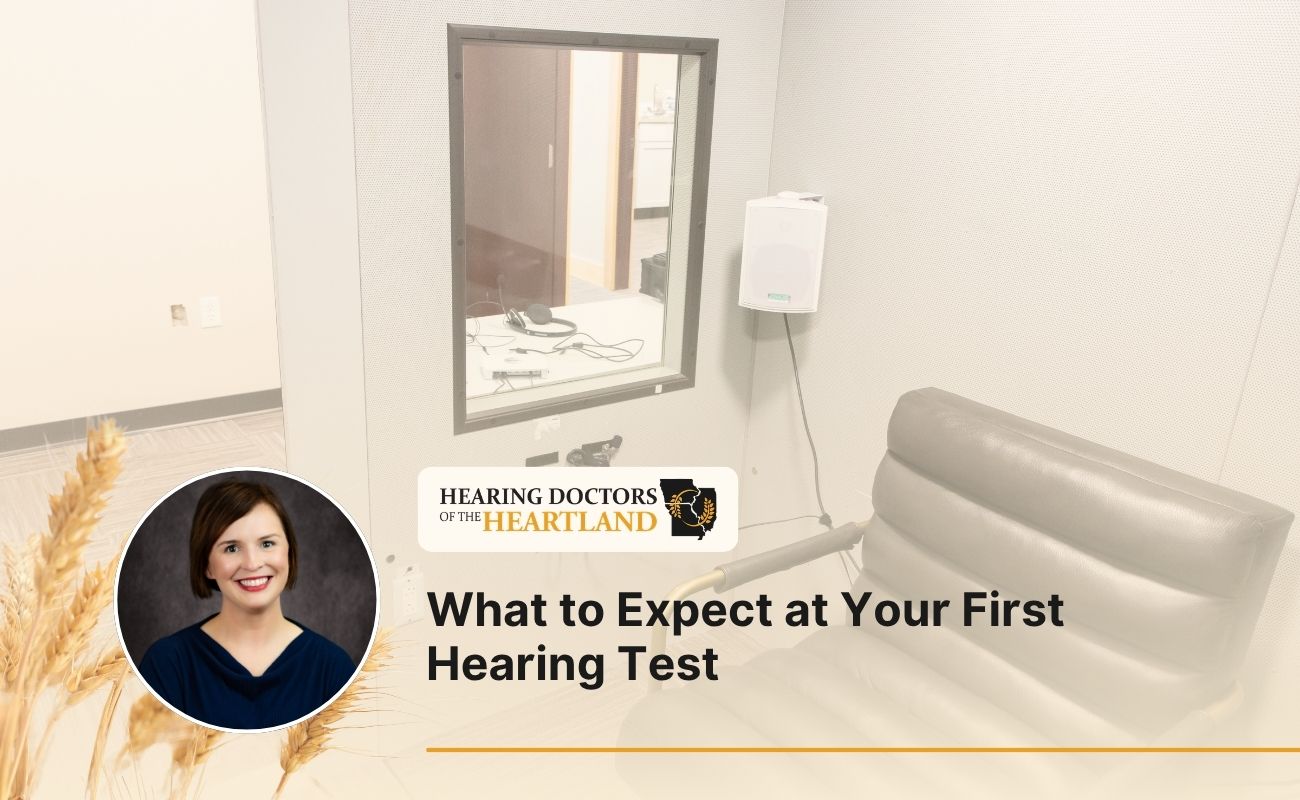
Tone testing. This is the part most people picture. You'll sit in a quiet, sound-treated room, put on headphones, and listen for soft tones at different pitches and volumes. Each time you hear one, you press a button or raise your hand. Your results are mapped onto a chart called an audiogram, which shows exactly where your hearing is strong and where it may have weakened.
Word recognition testing. Hearing isn't just about detecting sound — it's about understanding speech. Your audiologist will say words at a comfortable volume and ask you to repeat them back. This tells us how well your ears and brain are working together to process spoken language, which is often where people first notice everyday difficulty.
When the evaluation wraps up, your audiologist will walk you through everything in plain language — no jargon, no rushing. You'll see your audiogram explained clearly. If hearing loss is detected, you'll learn about your options, which might include hearing aids, assistive devices, a referral to a medical specialist, or simply keeping an eye on things over time.
If no hearing loss is found, you'll leave with a baseline on file and peace of mind. Either way, you'll walk out knowing more than you did walking in.
Pediatric hearing evaluations are available at all of our locations. Catching hearing issues early in children really matters — untreated hearing loss can affect how kids develop speech, perform in school, and connect socially. Testing for younger children uses age-appropriate methods that don't require verbal responses, and our team is experienced at making both kids and parents comfortable throughout.
Learn more about our pediatric services here.
A comprehensive hearing evaluation takes about 60 minutes, including the time your audiologist spends reviewing results and answering your questions. We don't rush appointments.
Our audiologists and hearing instrument specialists serve patients across Iowa and Illinois, with locations in Ankeny, Fort Dodge, Quincy, Macomb, and Galesburg. Schedule your evaluation at hearingdocs.com or call the location nearest you.