
Dr. Jessica Dimmick, Au.D
April 29, 2026

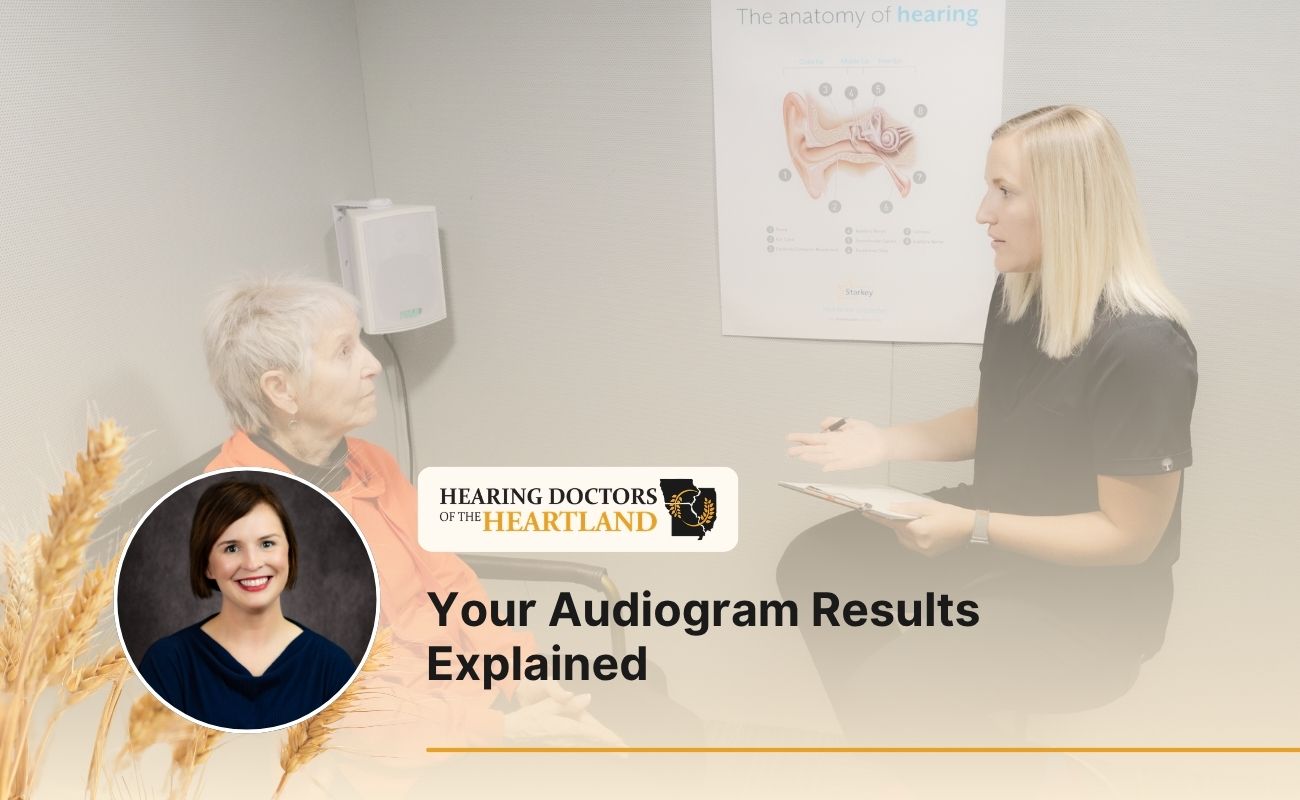
So you've just had a hearing test, and the audiologist handed you a graph covered in X's and O's. Maybe they explained it, maybe they didn't have much time. Either way, you're probably staring at that chart wondering what it actually means for you. Here's a clear breakdown.
An audiogram is a visual map of your hearing — where it's working well and where it's not. The graph has two axes. Left to right shows pitch, moving from low sounds like a bass drum on the left to high sounds like a bird chirping on the right. Top to bottom shows volume, measured in decibels (dB). The higher up the chart, the softer the sound. The lower down, the louder something has to be before you can hear it.
That's really all the chart is doing: showing how soft a sound can be at each pitch before it disappears for you.
Each symbol marks the softest sound you could detect at a specific pitch during your test. That point is called your hearing threshold. O's represent your right ear, X's your left. When symbols sit near the top of the chart, your hearing is within normal range at that frequency. When they drop toward the bottom, it means you need sounds to be louder before you can catch them.
High-frequency hearing loss — where the symbols dip down on the right side of the chart — is the most common pattern, especially in adults. It's also why so many people say, "I can hear you talking, I just can't make out what you're saying." The vowels in speech tend to be low-pitched and carry easily. The consonants — the sounds that make words distinct — are higher-pitched and get lost first.
Audiologists use a standard scale to describe how much hearing loss is present based on where your thresholds fall:
Keep in mind that most people don't have a flat line across their audiogram. Your hearing might be completely normal in the low pitches and drop significantly in the highs — which is exactly why certain situations feel harder than others. A noisy restaurant is brutal when high-frequency hearing loss is in the mix, because background noise drowns out the speech sounds you're already struggling with.
Threshold testing is just one piece of the puzzle. A full hearing evaluation at Hearing Doctors of the Heartland also includes word recognition testing, which measures how clearly you understand speech — not just how loud it has to be. Two people can have identical audiograms but very different word recognition scores, and that difference matters when deciding on treatment.
You'll also have tympanometry, a quick, painless test that checks the health of your eardrum and the tiny bones behind it. This helps identify whether hearing loss is coming from the outer or middle ear — something that's sometimes treatable medically — versus the inner ear, which is where most permanent hearing loss originates.
Taken together, these tests give a complete picture of both the degree and the type of your hearing loss.
Your audiogram becomes the blueprint for everything that follows. If hearing aids are recommended, the results are used to program them precisely to your hearing profile — each frequency adjusted to give you the right amount of amplification where you need it.
At Hearing Doctors of the Heartland, we use a process called real ear verification to confirm your hearing aids are actually delivering the right sound levels in your ear canal, not just on paper. Fewer than a third of hearing practices do this consistently, but it's one of the most important steps in making sure your aids work the way they should.
When you know what your audiogram shows and why certain situations feel harder than others, the whole process starts to make sense. You can ask better questions, set realistic expectations, and feel more confident about the road ahead — whether that means hearing aids, medical treatment, or simply monitoring your hearing over time.
If you have questions about your results, or if you haven't had a comprehensive evaluation yet, reach out to your nearest Hearing Doctors of the Heartland location in Iowa or Illinois. Our team of experienced Audiologists take the time during your appointment to explain your hearing results and answer any questions you might have.